


Whitsunday Waterfalls Guide: Where to Find Waterfalls in The Whitsundays
Not every visitor arrives in The Whitsundays expecting waterfalls.
Whitehaven Beach, the Great Barrier Reef and the region's 74 islands tend to steal the spotlight. Yet beyond the beaches and turquoise bays, you'll find freshwater swimming holes, rainforest cascades and hidden waterfalls scattered across the mainland and islands.
Some are easy to access and perfect for a family day out. Others require a hike, a boat, or a little local knowledge. Together, they reveal another side of The Whitsundays, one shaped by rainforest-covered mountains, rugged island landscapes and freshwater pools.
One of the best things about waterfall chasing in The Whitsundays is that many of the region's waterfalls come with an equally rewarding walk. Whether you're exploring rainforest trails, island anchorages or coastal bushwalks, the journey often becomes just as memorable as the destination.
Whether you're looking for a refreshing swim near Airlie Beach or an island adventure that takes you beyond the usual tourist trail, this guide will help you find the best waterfalls in The Whitsundays.
Best Time to Visit Waterfalls in The Whitsundays
Waterfalls in The Whitsundays are constantly changing with the seasons. Cedar Creek Falls remains one of the most popular freshwater swimming spots year-round, while many of the island waterfalls are seasonal and appear after periods of rainfall. Early mornings and late afternoons often provide the most peaceful experience, particularly at Cedar Creek Falls, where visitor numbers can increase during school holidays and weekends.
Mainland Waterfalls Near Airlie Beach
Cedar Creek Falls
If there's one waterfall every visitor should know about, it's Cedar Creek Falls.
Located around 30 minutes from Airlie Beach and 20 minutes from Proserpine, Cedar Creek Falls is the most accessible and well-known waterfall in The Whitsundays. Surrounded by bushland and rocky escarpments, the falls cascade into a large freshwater swimming hole that attracts locals and visitors year-round.
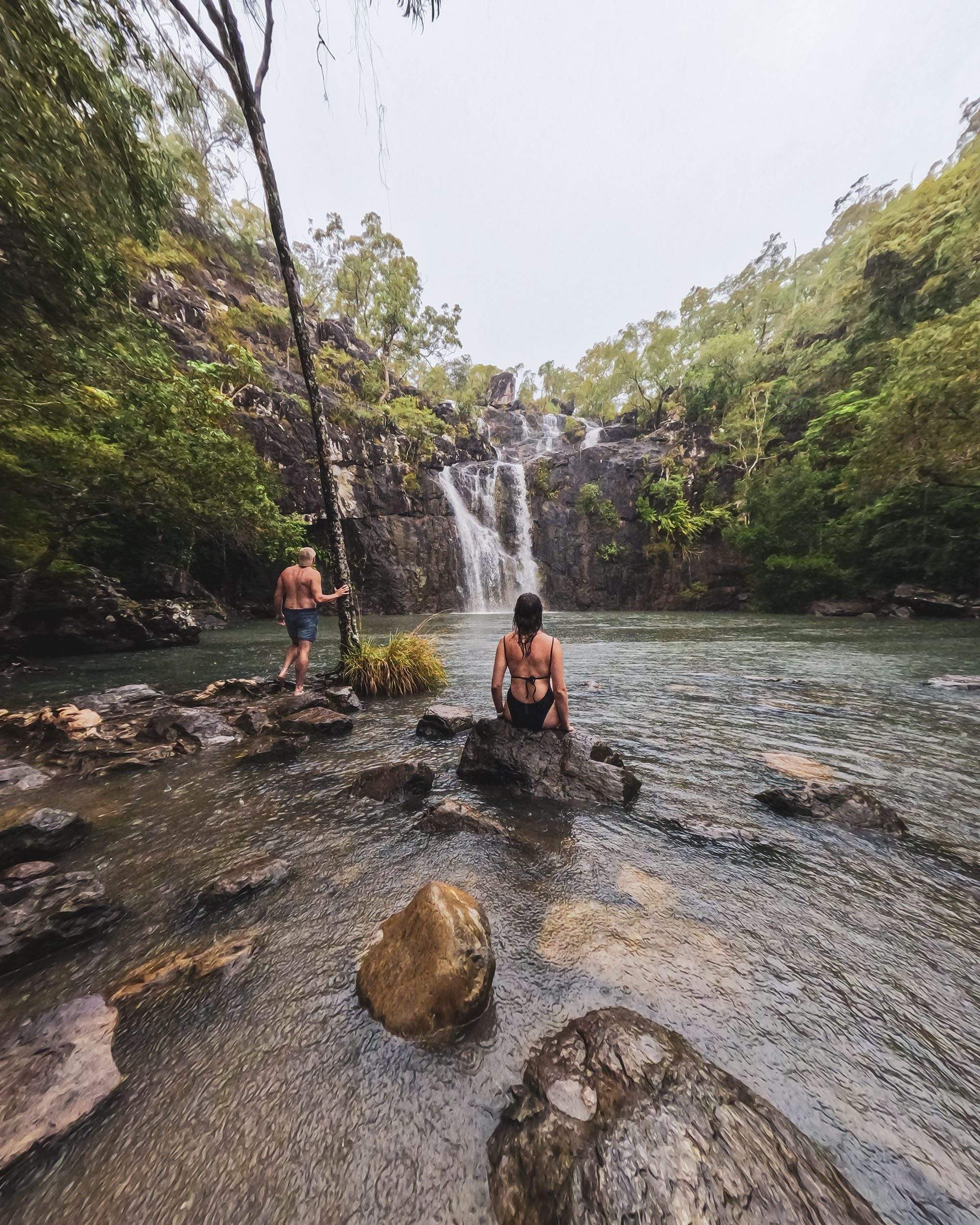
The site offers easy parking, public amenities and relatively straightforward access to the water, making it a popular choice for families and travellers looking to escape the tropical heat.
The falls are located on the traditional Country of the Gia people and the surrounding landscape holds cultural significance. The creek systems and bushland support a variety of native plants, wildlife and birdlife, making the area worth exploring beyond the water's edge. A short walk leads to an elevated viewpoint overlooking the falls and swimming hole below. From here, visitors can take in a different perspective of the landscape before heading down for a swim.
Keep an eye out for Ulysses butterflies flashing through the trees, colourful lorikeets feeding overhead and skinks darting between the rocks. The area feels particularly alive in the early morning and late afternoon when birdlife is most active.
For visitors seeking a deeper understanding of the surrounding rainforest ecosystem, Driftwood Tours Whitsundays combines a visit to Cedar Creek Falls with a guided rainforest walk through Conway National Park, offering insights into the region's plants, wildlife, and cultural significance.
The falls are best to go in during the wet season while there is water flowing. On hot and humid days nothing is better than a refreshing dip!
Other local operators, including Airlie Adventure Tours and Red Cat Adventures, also offer guided experiences to Cedar Creek Falls, making it easy to visit even without your own transport.
Airlie Creek Track & Rock Pools
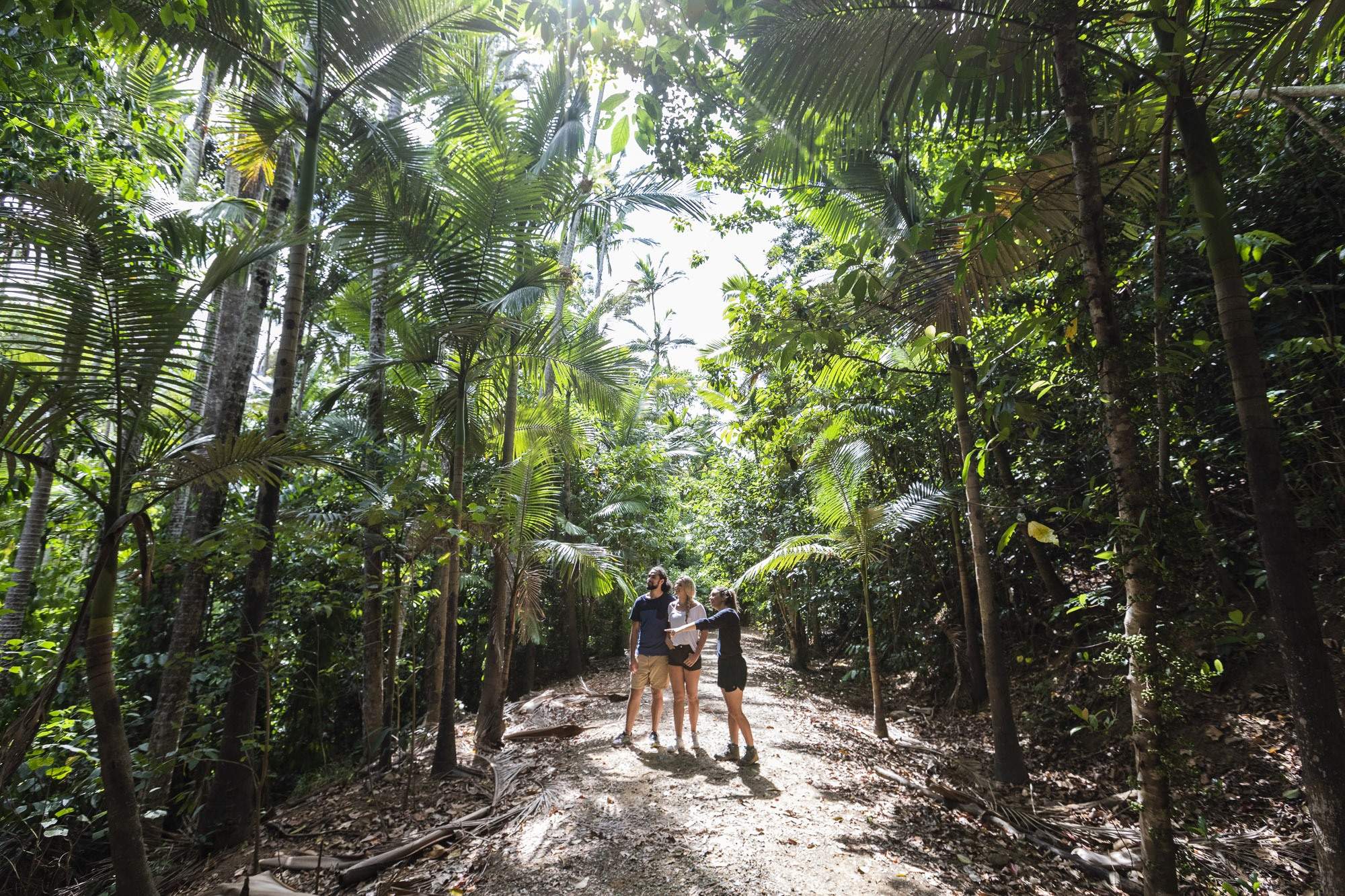
Not every freshwater escape in The Whitsundays requires a road trip. Located right in Airlie Beach, the Airlie Creek Track offers a peaceful walk through Conway National Park, making it one of the easiest nature experiences to access from town. The 1.9km return track winds through subtropical forest filled with towering fig trees, native birdlife and unique plant species found only in this part of Queensland.
The highlight of the walk is a series of natural rock pools tucked away within the forest. After significant rainfall, small waterfalls can be seen flowing through the creek system, creating a tranquil oasis just minutes from the centre of Airlie Beach.
Even when the water isn't flowing, the shallow swimming hole at the end of the track provides a peaceful place to cool off beneath the rainforest canopy. Combined with the beautiful old fig trees and several spots to pause and take in the surroundings, the walk offers a refreshing change of pace from the vibrant foreshore.
Best of all, you don't need a car to get there. Visitors staying in Airlie Beach can simply walk to the trailhead and be surrounded by nature within minutes.
Finch Hatton Gorge, Araluen Cascades & Wheel of Fire Falls
While technically located just outside The Whitsundays region, Finch Hatton Gorge has become a favourite day trip for visitors wanting to combine rainforest walks with spectacular freshwater swimming spots.
Located approximately two hours from Airlie Beach, Finch Hatton Gorge sits within Eungella National Park and offers some of the most impressive waterfall scenery in North Queensland.
The first stop is Araluen Cascades, where crystal-clear water flows through smooth granite formations surrounded by lush rainforest. Visitors can swim, relax on the rocks or simply enjoy the peaceful setting.
For those wanting a little more adventure, continue along the walking track to Wheel of Fire Falls. The trail climbs through rainforest and creek crossings before reaching a larger waterfall and swimming hole framed by towering cliffs and tropical vegetation.
The journey is part of the experience, with palms, tree ferns and native wildlife accompanying visitors along the way. Together, Araluen Cascades and Wheel of Fire Falls make for an unforgettable waterfall day trip from Airlie Beach.
Coral Beach Waterfall
One of the smallest waterfalls in this guide may also be one of the most rewarding to reach.
Located near Shute Harbour, Coral Beach is accessed via a picturesque bushwalk through Conway National Park. The track winds through dry tropical forest before opening onto a secluded beach overlooking the Whitsunday Islands.
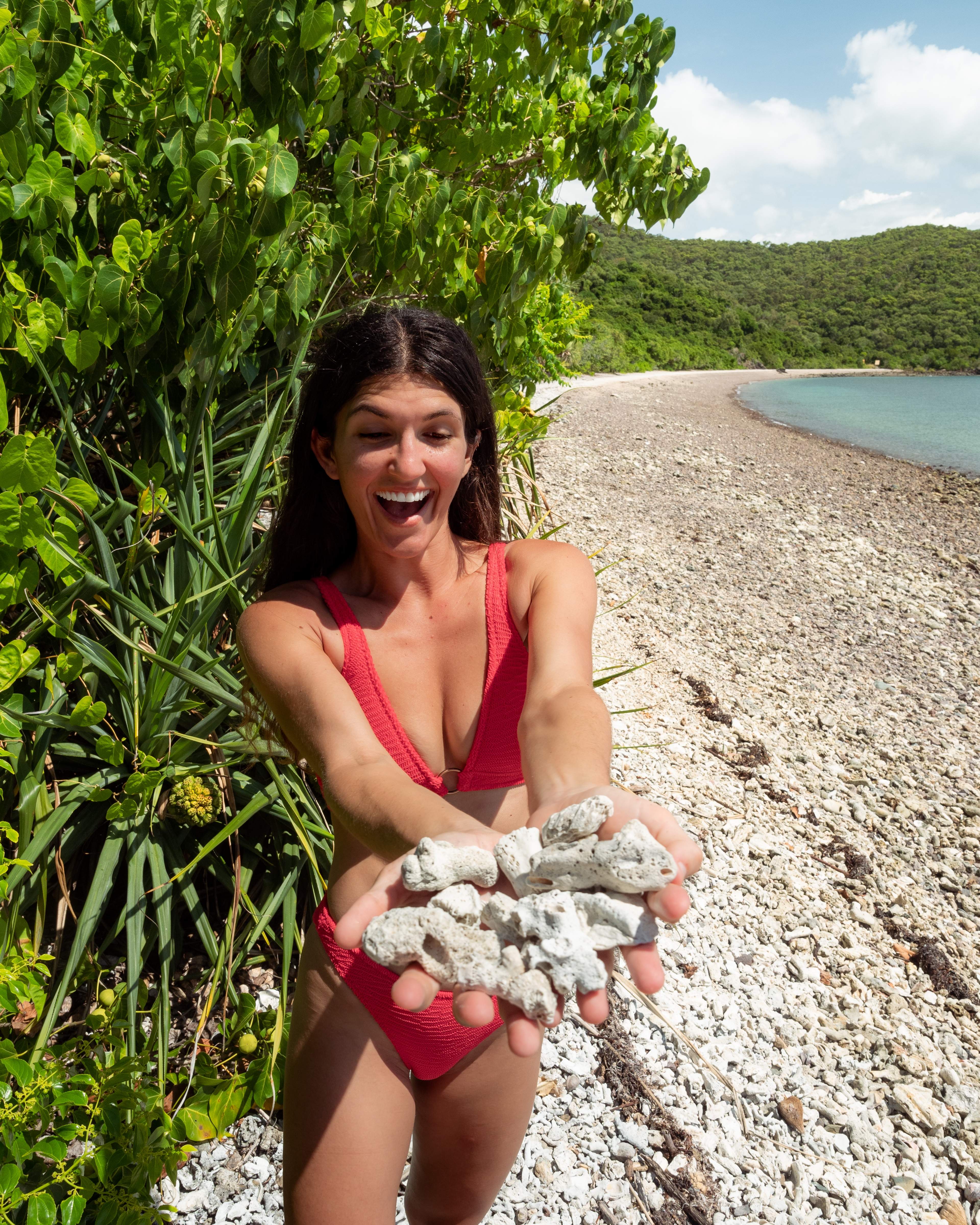
While many visitors come for the beach itself, those visiting after recent rainfall may be lucky enough to spot a small seasonal waterfall flowing near the track. It is less a dramatic cascade and more a refreshing natural feature that adds to the experience of exploring this beautiful corner of the mainland.
From Coral Beach, visitors can continue to the lookout for sweeping views across the islands and Coral Sea. Pack plenty of water, wear suitable footwear and allow time to simply enjoy the journey.
Island Waterfalls in The Whitsundays
Many visitors are surprised to learn that several waterfalls can also be found throughout the Whitsunday Islands.
These waterfalls are often tucked away inside sheltered bays and anchorages, rewarding those who explore beyond the beaches and reefs. Reaching them typically requires a boat, making them among the region's most secluded natural attractions.
Hook Island Waterfall
One of the best-known island waterfalls can be found on Hook Island.
Located beyond the Ngaro Cultural Site near Nara Inlet, this waterfall flows down the island's steep rainforest-covered slopes into the sheltered waters below. The waterfall is most impressive when flowing strongly, creating a striking contrast against the rugged cliffs and lush vegetation surrounding the inlet. The waterfall usually only flows during the wet season (December - March) after heavy rainfall. Visitors can arrive by private charter, bareboat yacht, or guided sailing experiences.
Stonehaven Waterfall
Stonehaven Bay on Hook Island is known for its excellent anchorage, snorkelling opportunities and spectacular sunsets. It is also home to a few small waterfalls.
Stonehaven Bay is one of the most scenic anchorages in The Whitsundays. Surrounded by vibrant reefs and overlooking the Whitsunday Passage, it's a favourite stop for sailors seeking calm waters and island adventures. Tucked away near Anchor Point, Stonehaven Waterfall can often be heard before it is seen. Water tumbles through rocky gullies and natural pools hidden within the surrounding forest, creating a rewarding destination for adventurous visitors willing to explore beyond the shoreline. The walk requires care, as there are no formal tracks leading to the falls. Sturdy footwear and caution are recommended, particularly after wet weather.
Many visitors reach Stonehaven as part of a sailing holiday, a private charter, or a bareboat adventure. Operators such as Portland Roads, Whitsunday Rent Yacht and Wings regularly explore some of the region's more secluded bays, giving visitors opportunities to experience a different side of The Whitsundays.
Luncheon Bay Waterfall
Luncheon Bay offers another hidden freshwater surprise on Hook Island.
While smaller than the waterfalls found at Nara Inlet or Stonehaven, this gentle cascade drops into a small rock pool tucked within the surrounding bushland. The setting feels more like a natural freshwater spa than a traditional waterfall, creating a peaceful place to pause and cool off while exploring the island.
Whitsunday Paradise Explorer regularly visits many of these lesser-known locations and has witnessed firsthand how the islands transform throughout the year.
At the height of the wet season, we get lots of small waterfalls that appear briefly throughout Hook Island, giving visitors fleeting glimpses of a different side of The Whitsundays.
Waterfall Safety Tips
Before visiting any waterfall in The Whitsundays, keep these simple safety tips in mind:
- Don't enter floodwaters or cross flooded causeways.
- Wear footwear on slippery rocks and uneven surfaces.
- Carry drinking water, particularly on longer walks.
- Respect cultural and heritage sites.
- Check local conditions before visiting remote island locations.
- Supervise children around deep water and rock pools.
- Take care when swimming near waterfalls, as water depth can vary.
Discover Another Side of The Whitsundays
From the popular swimming hole at Cedar Creek Falls to the hidden cascades of Hook Island, waterfalls offer a different way to experience The Whitsundays. They invite you to slow down, step off the beach for a moment and explore the rainforests, valleys and island landscapes that help make this region so special.
So next time you're planning your Whitsunday adventure, leave room for a waterfall or two. You might just discover one of the region's best-kept secrets.
Sign up for our latest deals, events, specials & secrets!